


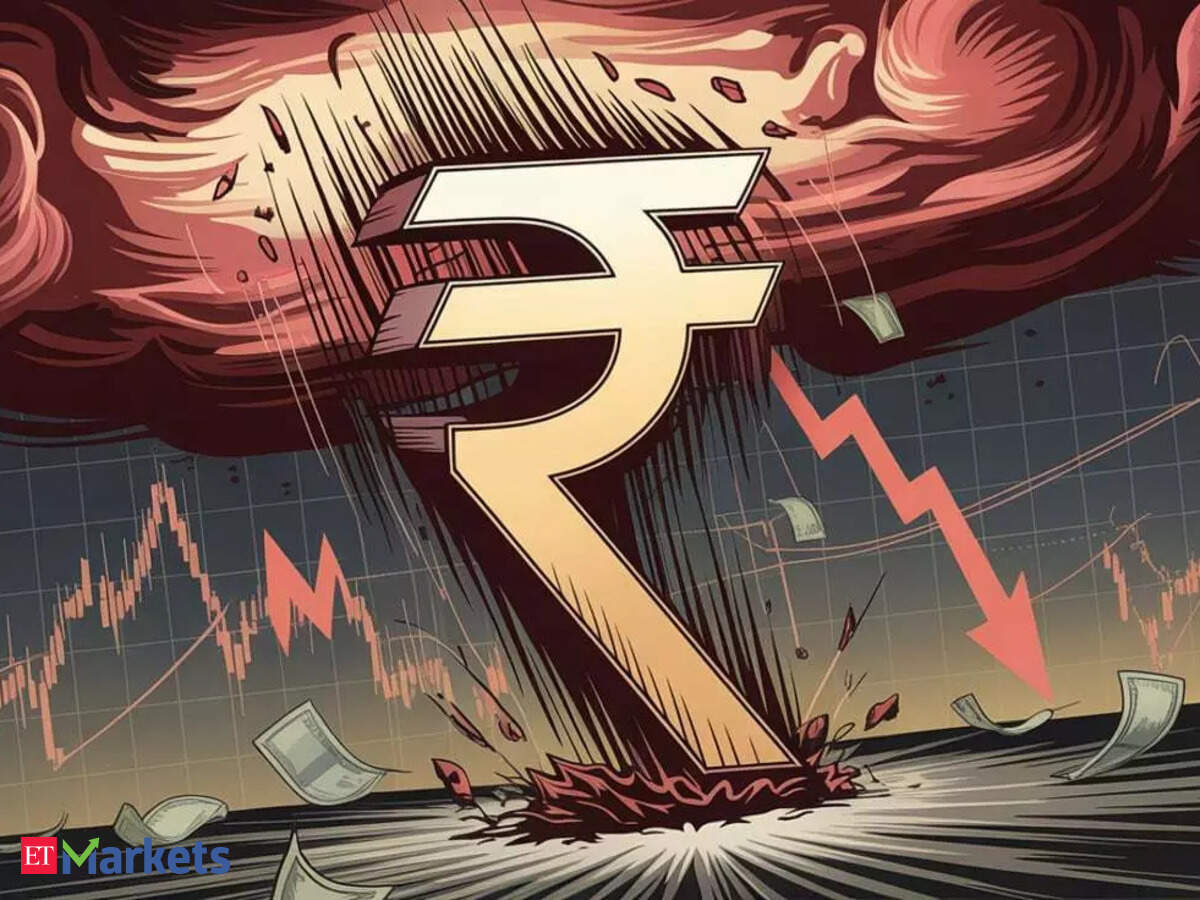
The rupee ended down 0.5% at 96.3150 per dollar, its sharpest single-day fall in more than two months after it breached the key psychological barrier of 96 even as dollar sales by state-run banks limited its fall.
Borrowing costs from the US to France, Britain and Japan hit their highest in decades on Thursday, squeezing already pressured government finances, and threatening stocks, credit and other global assets.
The 10-year US Treasury yield, a yardstick for borrowing costs and asset prices globally, rose to 5.34%, its highest since 2002.
Brent crude oil prices reclaimed the $100-per-barrel mark as well after China suspended oil products exports, potentially tightening fuel markets already coping with supply shortages globally.
The multi-front pressures drove down stocks in Mumbai by about 1% while the yield on the 10-year benchmark bond rose to its highest level in over two years.
Supply disruptions, volatile energy prices and global uncertainty could pose near-term risks to inflation, the rupee and capital flows, the Indian government said in a report on Thursday.Prevailing pressures on the rupee have also kept exporters reticent about hedging their receivables even as importer hedging remains robust, exacerbating the demand-supply mismatch in the foreign exchange market.
FX advisory firm IFA Global recommends that exporters should hedge cautiously and only to the extent of in-hand orders while importers are advised to hedge on any dips on the dollar-rupee pair.
Elsewhere, Asian currencies were down between 0.1% and 0.4% while the dollar index rose 0.5% to nearly 102. Investors now await a key US labour market report due on Friday, while Indian financial markets will be shut for a local holiday.
