


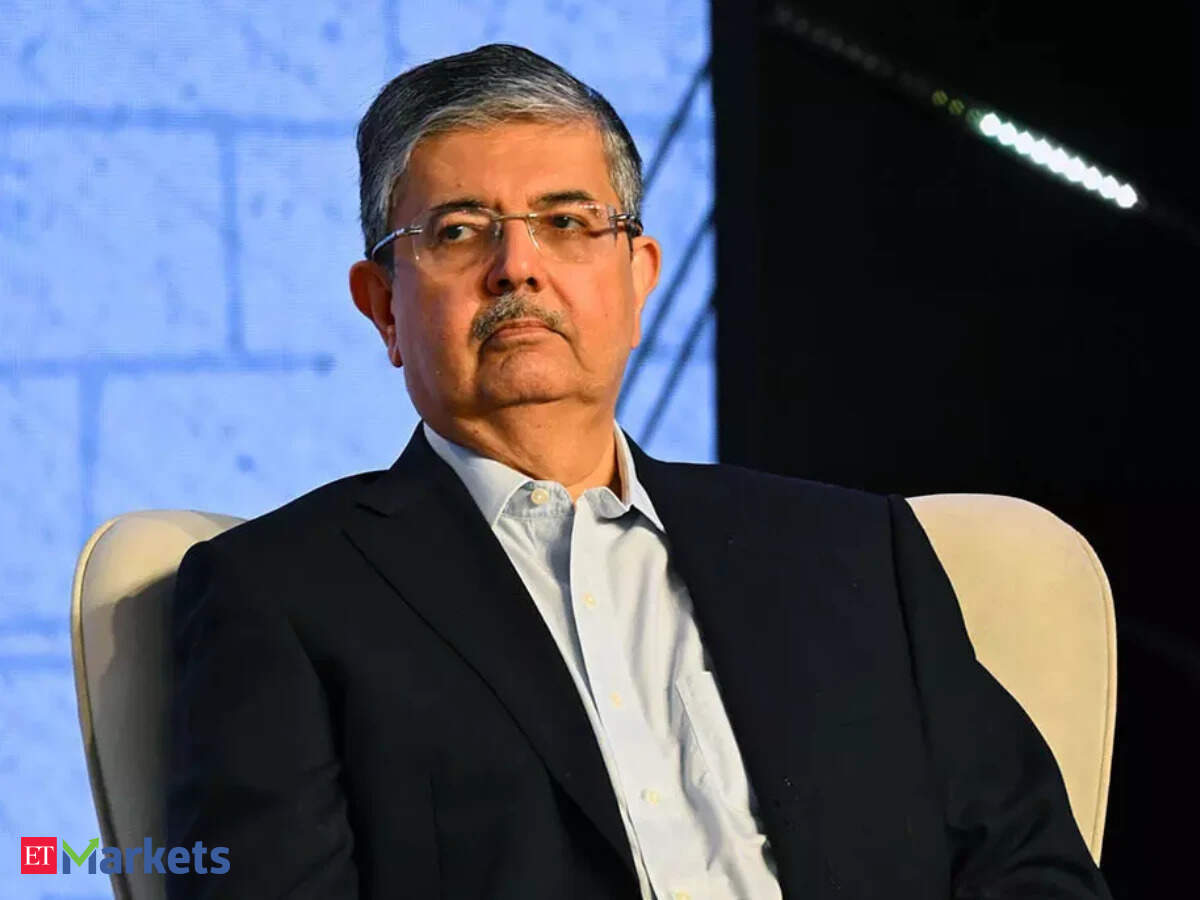
Kotak, speaking at Business Standard BFSI Summit, said the government and the Reserve Bank of India had acted at the right time by mobilising foreign currency deposits amid heightened geopolitical tensions following the Middle East conflict and the Russia-Ukraine war. The scheme has strengthened India’s foreign currency resources while the country continued to build its domestic macroeconomic fundamentals, he said.
“Some people have called the FCNR(B) as a steroid, but I think about it as a strong insurance policy,” Kotak said, arguing that the funds had bought India valuable time to prepare for future external financing pressures.
However, he cautioned that the money would eventually have to be repaid. India has mobilised more than $130 billion through the arrangement, and the total repayment obligation, including interest, could rise to $160 billion-$170 billion, he said.
“We don’t need to panic about it today, but we must be strategic about it,” Kotak said, urging policymakers and financial sector participants to prepare for the repayment pressure well before the deposits mature.
He also commended the RBI for closing the scheme on August 31, saying the timing helped India lock in foreign currency funding before US bond yields rose sharply in early September. The increase in yields would have made the borrowing at least 100 basis points more expensive had India mobilised the funds later, he said.
Kotak said the scheme had allowed India to secure dollar funding at a relatively lower fixed rate, providing temporary protection against a volatile global interest rate environment.However, he flagged a wider challenge for India’s financial markets: the growing attractiveness of US assets relative to domestic investments when returns are compared on a currency-hedged basis.
A 10-year US Treasury bond yields around 5%, but hedging the dollar exposure into rupees costs about 3.5% annually, taking the effective rupee return to around 8.5%, Kotak said. This compares with a yield of about 7.4% on India’s 10-year government bond.
The difference creates an incentive for investors to favour foreign currency assets over domestic fixed-income instruments, he said, adding that global interest rates, inflation and geopolitical tensions would continue to influence capital flows.
Kotak said India must use the three-to-five-year window provided by the FCNR(B) scheme to strengthen its economic structure, boost investment in research and technology, and develop industries that the world needs.
“India has to build, at least in a few areas in the next five years, to be a counterpoint and to be counted in the world in what the world needs from us,” he said, stressing that the country cannot rely solely on foreign investors seeking access to its domestic market.
Kotak said the FCNR(B) scheme should therefore be viewed as a temporary buffer rather than a substitute for structural reforms. The priority, he said, should be to use the time it has bought to strengthen India’s macroeconomic fundamentals before the repayment obligations come due.
