


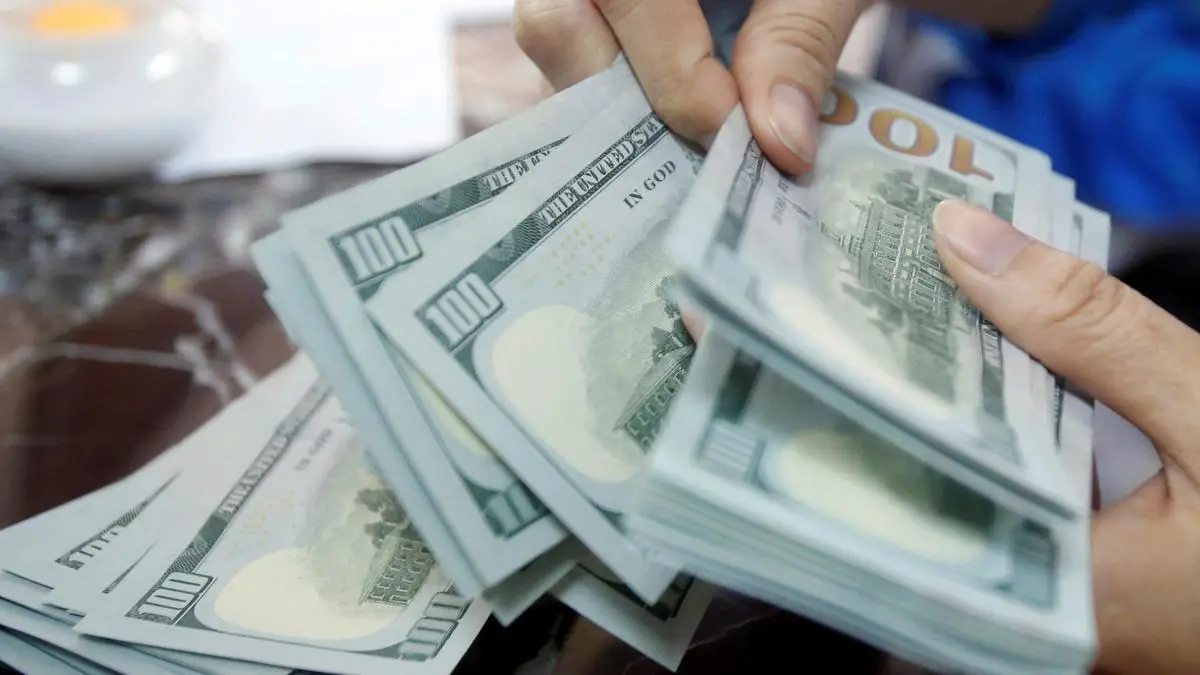
In Money Beyond Borders, economist Barry Eichengreen traces the history of international currencies—from Ancient Greece’s silver coins to the British pound and the modern US dollar—to explain why reserve currencies enjoy long lifespans.
| Photo Credit:
NGUYEN HUY KHAM
On some measures, China has already overtaken the United States as the world’s largest economy. But the US dollar retains a dominant role in the international financial system and trade.
How long will this continue? Looking to history, Barry Eichengreen’s new book Money Beyond Borders seeks to answer this question.
Eichengreen is a respected professor of economics and political science at the University of California. He is well qualified to write this book. As he notes in his introduction: This is not the first book about international currencies. It is not even my first book about international currencies.
Traded coins date back to Ancient Greece
Throughout history, it has been usual for one currency to dominate in international transactions. Since the Second World War, this has been the US dollar.
Eichengreen’s book goes all the way back to the first coins to be used internationally, the Athenian “owls”. The weight, fineness and design remained the same for centuries, helping to build confidence in the currency. Athens was a commercial hub and led the Delian League of Greek city-states.
The Roman denarius served as international currency even beyond the extensive Roman Empire. It reached its maximum extent around 117 CE.
Then, by the fifth century CE, the Byzantine gold solidus was used for trade from Britain to India.
During the Renaissance, the Florentine gold florin flourished as Florence became the European centre of banking and finance. The florin’s appearance and gold content were unchanged for three centuries, a key factor in maintaining confidence in a currency.
The Spanish real became the first truly global currency. As eight of the coins amounted to one peso, they were known as “pieces of eight”. Later, Dutch guilders bloomed as Amsterdam became the hub of global foreign exchange markets and the Dutch East India Company expanded its operations.
The British pound sterling took over the role in the 18th century as the sun rose on the British Empire and London grew as a financial centre.
The nations issuing these currencies shared common characteristics that gave foreign traders confidence in the coins. They tended to be large hubs for international commerce, were politically stable and economically advanced and often had colonies.
Emergence of the US dollar as the global currency
Eichengreen describes how the international usage of the US dollar spread once the US central bank was established in 1913, the US economy grew, and the UK was weakened by the First World War.
The Allied powers met at Bretton Woods in the US in 1944 to plan the post-WWII international financial system. They agreed on an indirect gold standard. The gold price would be fixed in US dollars. Other currencies would then be pegged to the dollar, reinforcing its role as the dominant currency.
Around 90 per cent of transactions in the foreign exchange market now involve the US dollar. US dollar assets make up the majority of international reserves held by the world’s central banks. And the US dollar is used for invoicing about 40 per cent of global trade.
The US dollar has an “exorbitant privilege”
This special status of the US dollar has been termed an “exorbitant privilege”.
This unique status increases the global demand for US dollar bonds. This, in turn, allows the US government and companies to borrow at lower interest rates.
As there is more demand for US dollar assets, it also tends to make the US dollar stronger. This is good news for Americans buying imports or travelling overseas. But it also makes their exports more expensive and therefore less competitive.
Increasingly, US dollar dominance has been resented by many other countries. As Eichengreen observes, when Russia was locked out of the global financial system after its invasion of Ukraine in 2022, it triggered: […] a global rethink of dollar dependence. Other countries contemplating even the remote possibility that they might end up not on the best terms with the United States considered steps to avoid being in Russia’s position.
The life cycle of dominant currencies
Eichengreen shows that “international currency status is not forever”. But historically, currencies have maintained their status for a long time – even centuries – after the issuing country has ceased to be the dominant global economic power.
Eichengreen concludes “no other currency … is positioned to fill the dollar’s shoes”.
The euro is the second most used international currency. But it lags well behind. This is partly because the euro-area bond market is split between various countries.
The Chinese renminbi lags even further behind, as the government has controls over capital movements into and out of China. Also, as Eichengreen notes, China’s central bank is not fully independent, which may reduce confidence in the renminbi.
None of the privately issued cryptocurrencies actually function as currencies. Almost no legitimate purchases of goods and services are made with them. The price (in Australian dollars) of the best known one, Bitcoin, has halved over the past year.
For some time to come, the US dollar may remain, in Eichengreen’s expression, “the cleanest dirty shirt in the pile”.
A convincing story
Eichengreen’s book is a major scholarly endeavour by a respected authority that makes a convincing case. The endnotes run to 45 pages. There are 30 pages of bibliography and a comprehensive index. It will be a trusted reference.
The economic journalist Martin Wolf called it one of the best economics books in 2026 so far. It is a little dry, however, lacking any graphs, maps or illustrations in its 300-plus pages, which may reduce its appeal for a general reader.
John Hawkins, University of Canberra
Published on July 31, 2026
