


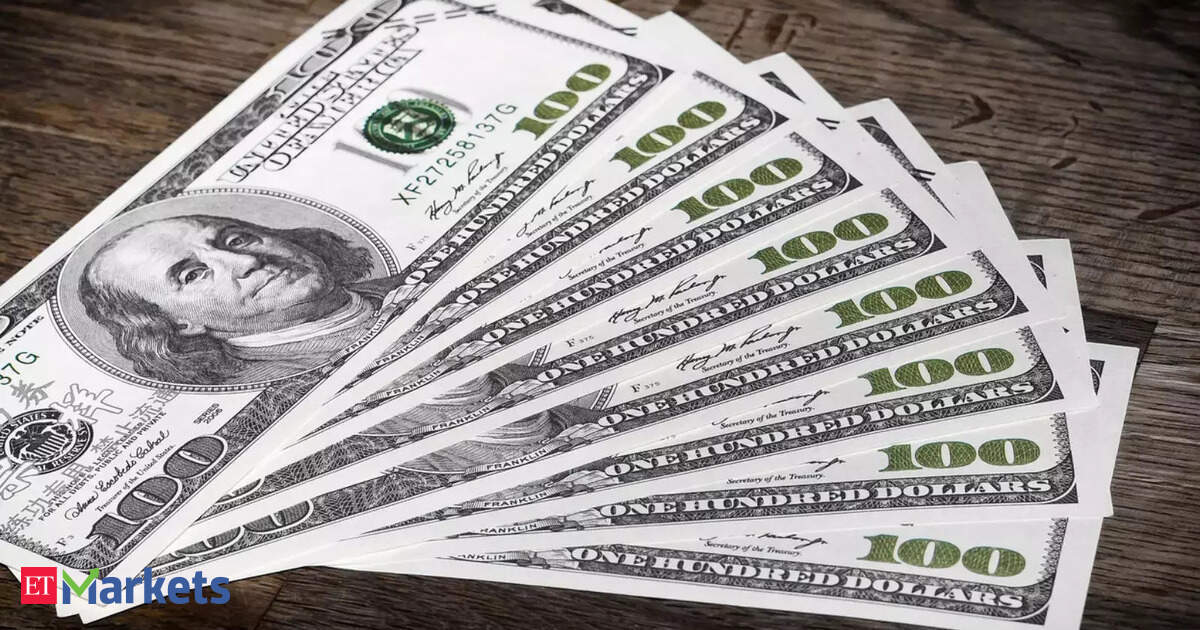
The greenback has emerged as the best-performing currency at the half-year point, according to Reuters, strengthening by 3% compared with last year, when it declined more than 10% and recorded its steepest first-half fall since the early 1970s, due to concerns over US tariff policy.
Despite expectations that a lasting ceasefire in the Iran conflict would help cool energy prices and ease some inflation concerns, investors still see US interest rates as more likely to rise. That view is being supported by a resilient US economy and continued optimism around AI-led growth.
This has strengthened the dollar, which has already been supported by geopolitical tension.
A firm stance from new Federal Reserve Chair Kevin Warsh has kept inflation in focus, with price pressures still running above the Fed’s 2% target. Markets now expect at least one rate hike this year and see an even chance of another, marking a sharp shift from expectations of no move just a few weeks ago.
The dollar is at 40-year highs against the yen and near year-highs versus the euro.
Stephen Jen, chief executive and chief investment officer of Eurizon SLJ Asset Management, told Reuters that buying American goods is more expensive, but that may not deter anyone.”The strong dollar is not welcomed by anyone in the world, including the United States,” he said.
“But U.S. companies, and being in the U.S., are just too valuable (or) attractive. Foreign companies are investing heavily in the U.S. to have a foothold, and that is also holding up the dollar,” he added.
Policymakers across countries from Auckland to Zurich are dealing with weaker local currencies, which can make imports more expensive. Although energy prices have eased, the cost of food, travel and many other goods and services has risen sharply.
South Korea’s won has fallen to record lows, boosting its stock market but also raising concerns among regulators. Emerging markets such as India have tried to support their currencies or raise interest rates to limit pressure from a stronger US dollar.
Growing optimism
Reuters reported that investors have increased their bets on further strength in the US dollar at the fastest pace ever seen in the first half of the year, according to data from the Commodity Futures Trading Commission (CFTC).
Traders hold a net long position worth around $30 billion, the largest since the start of Donald Trump’s second presidency. This build-up in positions has been rapid, with net holdings increasing by about $37 billion, making it the fastest first-half rise since CFTC records began in 2012.
“I certainly think in the near term, the risk is that you get a stronger dollar because of this increase to real rates in the U.S.,” Neuberger portfolio manager Joseph Purtell said.
“Can we break out of this range that we sort of held over the last six- to nine-month period? I think it’s likely.”
He added that while Neuberger expects the dollar to stay strong in the near term, it could weaken over the longer run due to broader concerns, including whether US government finances remain sustainable.
Record inflows
Since April, US economic data has consistently come in stronger than expected. Meanwhile, corporate earnings have also continued to beat estimates.
According to Morgan Stanley, the euro could fall closer to $1.10 in the near term if markets continue to expect a more hawkish Federal Reserve. The currency is currently trading around $1.135.
At the same time, excitement around AI and a series of mega IPOs, led by SpaceX, has attracted record levels of investment into US markets.
The US is also home to many of the world’s largest hyperscalers investing heavily in AI infrastructure and data centres, alongside some of the leading quantum computing companies.
According to BofA estimates, around $341 billion has flowed into US equities so far this year, compared with $134 billion during the same period last year.
A strong economy goes with a strong currency, said Mabrouk Chetouane, global head of market strategy at Natixis Investment Management.
“If we think that growth tomorrow is a combination of calculation capacities, energy, and to some extent, labour, which country and which geography is in the best position to benefit from this environment?” he said.
(Disclaimer: Recommendations, suggestions, views, and opinions given by experts are their own. These do not represent the views of the Economic Times.)
